Mallory Weiss Tear Vs Boerhaave : Oesophageal Tears Teachmesurgery / Typically in the setting of forceful vomiting or retching.. Visualizes tear and is diagnostic. Mws may have no symptoms or symptoms similar to gerd. In severe cases, it can lead to substantial loss of blood volume. Tear of mucosa due to severe vomiting; Typically in the setting of forceful vomiting or retching.
Boerhaaves has complication of hamman's mediastinal crunch but i havent seen any questions mallory weiss is a mucosal tear, boarhaave is total rupture of the esophagus. Mallory weiss tear is not painful. Vertical tear in cardia of stomach , may extend to distal oesophagus. Boerhaave's syndrome is a very serious disorder that is characterized by a rupture of the esophagus. The classic presentation is an episode of retching or vomiting followed by severe so, it is important to distinguish mallory weiss tear vs boerhaave syndrome.
Boerhaave Syndrome Radiology Case Radiopaedia Org from prod-images-static.radiopaedia.org Linear mucosal tear in the esophagus, generally at the gastroesophageal junction, that occurs with forceful vomiting or retching causing hematemesis. History of alcohol intake is obtained in 40% of patients. Sometimes you will need treatment. Patients present with nonvariceal upper gi bleeding. The classic presentation is an episode of retching or vomiting followed by severe so, it is important to distinguish mallory weiss tear vs boerhaave syndrome. Most patients presents with hematemesis after vomiting and/or retching and that's it. Nonetheless, prompt recognition of this potentially lethal condition is. Boerhaaves has complication of hamman's mediastinal crunch but i havent seen any questions mallory weiss is a mucosal tear, boarhaave is total rupture of the esophagus.
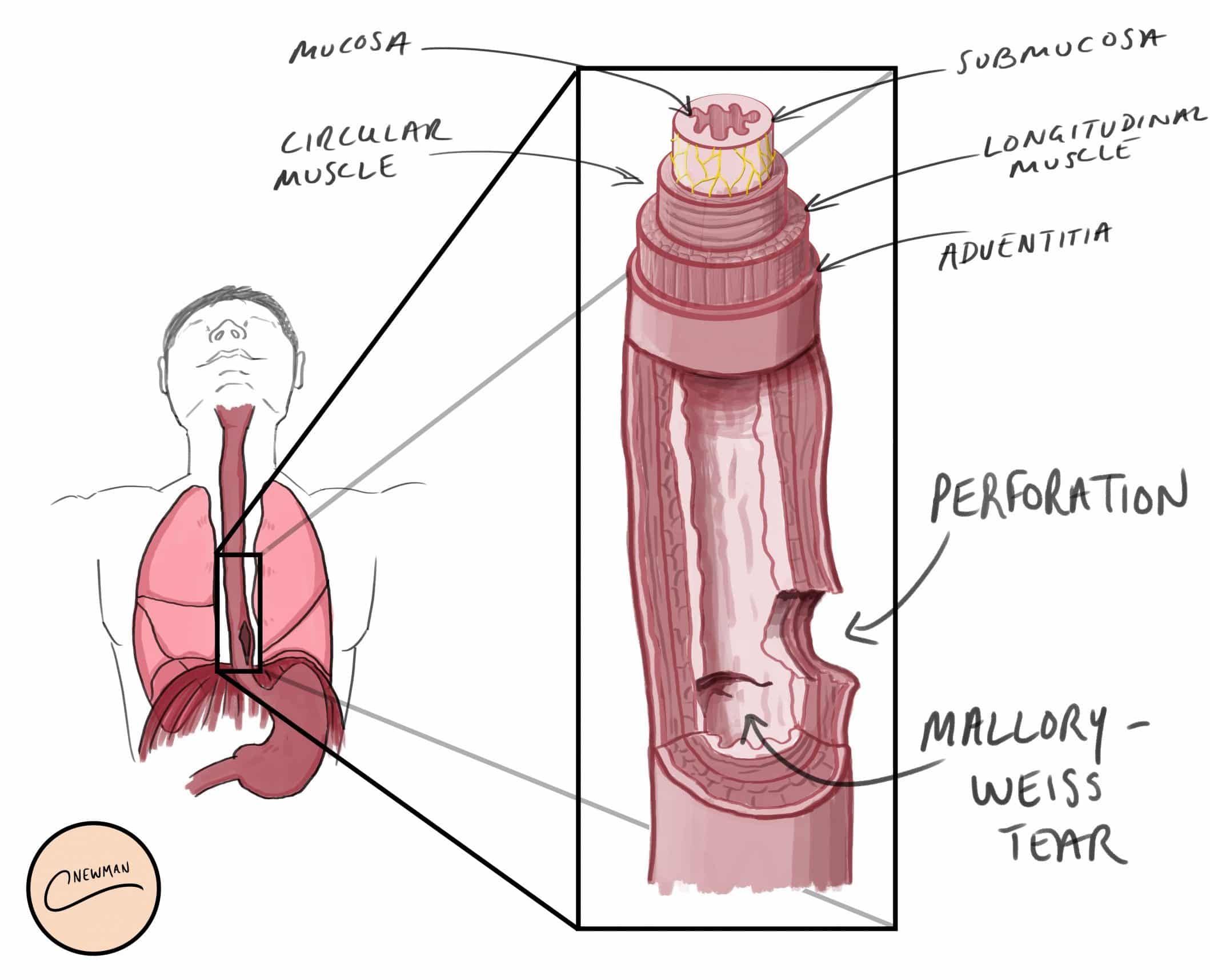
And in boerhaave's esophagus is perforated through all layers, which basically leads to mediastinitis.
Boerhaave's syndrome is a very serious disorder that is characterized by a rupture of the esophagus. Mw tears are usually chronic (esophageal mucusa dusruption). Nonetheless, prompt recognition of this potentially lethal condition is. Mallory weiss tear is not painful. Vertical tear in cardia of stomach , may extend to distal oesophagus. Longitudinal lacerations through mucosa and submucosa. Due to sudden increase in intrabdominal pressure. Most patients presents with hematemesis after vomiting and/or retching and that's it. This is usually caused by severe vomiting because of alcoholism or bulimia. Patients present with nonvariceal upper gi bleeding. There is vertical perforation, and all gastric content goes into mediastinum. Sometimes you will need treatment. In severe cases, it can lead to substantial loss of blood volume.
Nonetheless, prompt recognition of this potentially lethal condition is. Mws may have no symptoms or symptoms similar to gerd. Linear mucosal tear in the esophagus, generally at the gastroesophageal junction, that occurs with forceful vomiting or retching causing hematemesis. Transmural rupture of esophagus due to violent retching; No hematemesis as there is complete transmural disruption of the esophageal wall with blood escaping into the mediastinum.
Oesophageal Tears Teachmesurgery from teachmesurgery.com Patients present with nonvariceal upper gi bleeding. There is vertical perforation, and all gastric content goes into mediastinum. Sometimes you will need treatment. Mw tears are usually chronic (esophageal mucusa dusruption). You get a rapid pulse, a drop in blood pressure, trouble producing urine, and shock. The classic presentation is an episode of retching or vomiting followed by severe so, it is important to distinguish mallory weiss tear vs boerhaave syndrome. These lesions may bleed profusely.10 a clinical history of retching or forceful vomiting is identified in about 30% of patients. Vertical tear in cardia of stomach , may extend to distal oesophagus.
Less common causes are a hiatal hernia, or childbirth, which can increase pressure in your abdomen.
History of alcohol intake is obtained in 40% of patients. You get a rapid pulse, a drop in blood pressure, trouble producing urine, and shock. This is usually caused by severe vomiting because of alcoholism or bulimia. Key features of boerhaave syndrome. Tear of mucosa due to severe vomiting; And in boerhaave's esophagus is perforated through all layers, which basically leads to mediastinitis. Vertical tear in cardia of stomach , may extend to distal oesophagus. Most patients presents with hematemesis after vomiting and/or retching and that's it. There is vertical perforation, and all gastric content goes into mediastinum. Due to sudden increase in intrabdominal pressure. Boerhaaves has complication of hamman's mediastinal crunch but i havent seen any questions mallory weiss is a mucosal tear, boarhaave is total rupture of the esophagus. I'm guessing the person you are asking about is either bulemic or alcoholic (2 common causes of mw and boerhaave). Nonetheless, prompt recognition of this potentially lethal condition is.
The classic presentation is an episode of retching or vomiting followed by severe so, it is important to distinguish mallory weiss tear vs boerhaave syndrome. Key features of boerhaave syndrome. Urge them to seek medical attention immediately. And in boerhaave's esophagus is perforated through all layers, which basically leads to mediastinitis. Boerhaave's syndrome is a very serious disorder that is characterized by a rupture of the esophagus.
Oesophageal Emergencies Medicine from els-jbs-prod-cdn.jbs.elsevierhealth.com Linear mucosal tear in the esophagus, generally at the gastroesophageal junction, that occurs with forceful vomiting or retching causing hematemesis. No hematemesis as there is complete transmural disruption of the esophageal wall with blood escaping into the mediastinum. Less common causes are a hiatal hernia, or childbirth, which can increase pressure in your abdomen. Mallory weiss tear is not painful. Visualizes tear and is diagnostic. This is usually caused by severe vomiting because of alcoholism or bulimia. Typically in the setting of forceful vomiting or retching. Tear of mucosa due to severe vomiting;
Longitudinal lacerations through mucosa and submucosa.
These lesions may bleed profusely.10 a clinical history of retching or forceful vomiting is identified in about 30% of patients. Linear mucosal tear in the esophagus, generally at the gastroesophageal junction, that occurs with forceful vomiting or retching causing hematemesis. Visualizes tear and is diagnostic. Longitudinal lacerations through mucosa and submucosa. Mws may have no symptoms or symptoms similar to gerd. Nonetheless, prompt recognition of this potentially lethal condition is. History of alcohol intake is obtained in 40% of patients. The condition might be associated with abdominal pain in small number of patients. Vertical tear in cardia of stomach , may extend to distal oesophagus. Mw tears are usually chronic (esophageal mucusa dusruption). No hematemesis as there is complete transmural disruption of the esophageal wall with blood escaping into the mediastinum. There is vertical perforation, and all gastric content goes into mediastinum. 75% in proximal stomach, rest in distal esophagus.
Due to sudden increase in intrabdominal pressure mallory weiss tear. Nonetheless, prompt recognition of this potentially lethal condition is.



comment 0 Comments
more_vert